


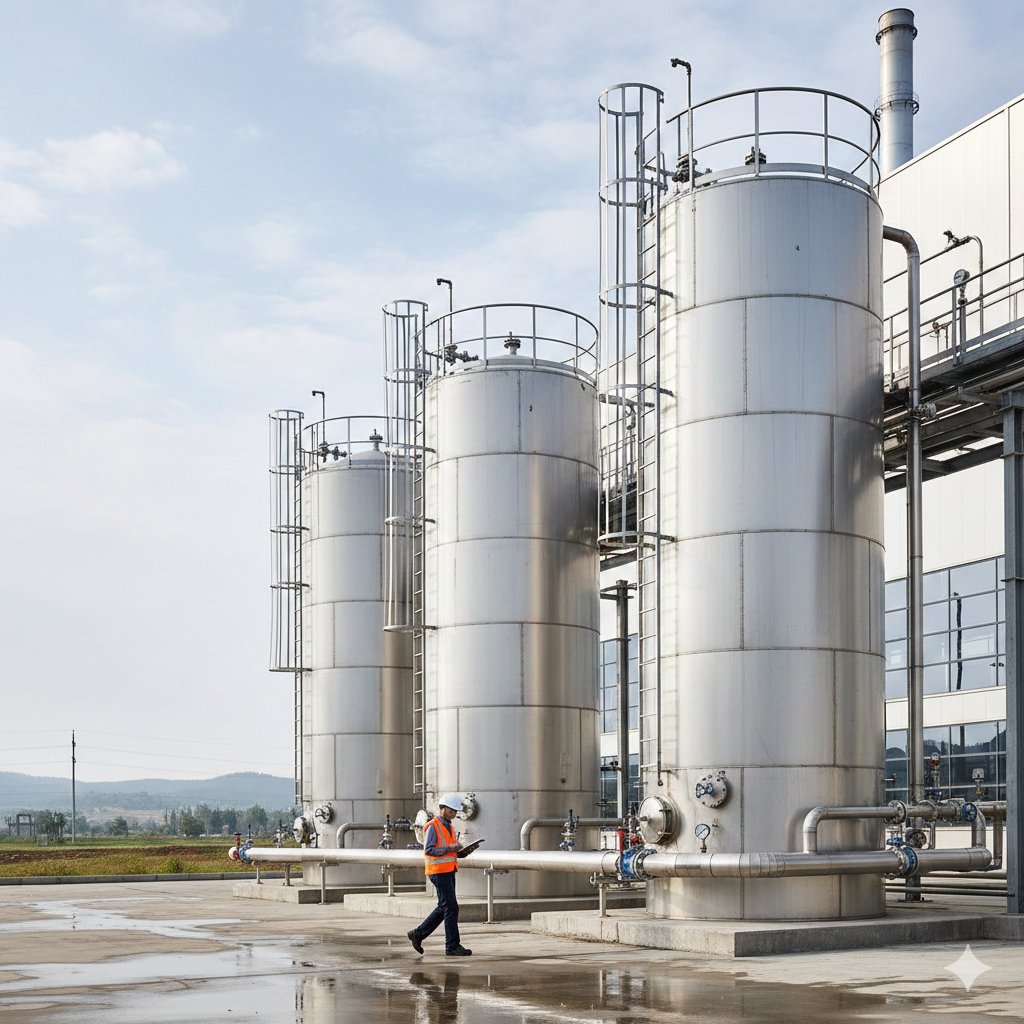
Selecting the right storage tank is a strategic decision for companies operating in manufacturing, energy, processing or logistics sectors. Industrial storage tanks are not standalone products but integral elements of wider technological systems, directly influencing safety, operational continuity and long-term costs. When specifying tanks for industrial use, decision-makers must consider not only capacity requirements but also operating conditions, regulatory obligations and future scalability. In British industrial practice, increasing emphasis is placed on reliability, compliance and lifecycle efficiency, particularly in environments where downtime or failure may result in significant financial losses. Steel tanks, designed for demanding applications and protected against corrosion, remain a common choice for enterprises seeking durable and adaptable storage solutions. A structured approach to specification helps ensure that the selected tank supports both current operational needs and long-term business objectives.
Selecting the right storage tank is a strategic decision for companies operating in manufacturing, energy, processing or logistics sectors. Industrial storage tanks are not standalone products but integral elements of wider technological systems, directly influencing safety, operational continuity and long-term costs. When specifying tanks for industrial use, decision-makers must consider not only capacity requirements but also operating conditions, regulatory obligations and future scalability. In British industrial practice, increasing emphasis is placed on reliability, compliance and lifecycle efficiency, particularly in environments where downtime or failure may result in significant financial losses. Steel tanks, designed for demanding applications and protected against corrosion, remain a common choice for enterprises seeking durable and adaptable storage solutions. A structured approach to specification helps ensure that the selected tank supports both current operational needs and long-term business objectives.
Understanding the operating environment and storage purpose
One of the most important factors when specifying an industrial tank is a thorough understanding of the environment in which it will operate. Companies must assess where the tank will be installed, whether indoors or outdoors, and how it will interact with surrounding infrastructure. External conditions such as temperature fluctuations, humidity, exposure to weather and proximity to other installations can significantly affect performance over time. Equally important is the purpose of storage, including the type of medium, its temperature, density and frequency of use. Steel tanks with appropriate corrosion protection are particularly well suited to industrial environments where mechanical strength and resistance to environmental factors are required. By clearly defining operational conditions at the outset, companies can avoid under-specifying tanks that may degrade prematurely or over-specifying solutions that increase costs without delivering additional value.
Structural strength and corrosion protection as core requirements
Industrial tanks are subject to continuous loads and stresses during daily operation, making structural integrity a critical consideration. Steel construction provides the mechanical strength needed to withstand internal pressures, large volumes and repeated filling cycles. However, strength alone is not sufficient in industrial settings where corrosion poses a long-term risk to safety and functionality. For this reason, modern steel tanks are manufactured using additional corrosion protection systems, such as specialised coatings or linings, tailored to the expected operating environment. These protective measures extend service life, reduce maintenance requirements and support compliance with safety standards. From a business perspective, investing in corrosion-protected steel tanks reduces the likelihood of unexpected failures and costly repairs, ensuring predictable performance over many years of operation.
Compliance with regulations and industry standards in the UK
In the UK, industrial storage installations are subject to a range of regulations covering safety, environmental protection and technical compliance. When specifying tanks, companies must ensure that designs align with applicable standards and inspection requirements. This includes considerations related to load-bearing capacity, leak prevention, access for inspection and compatibility with existing systems. Steel tanks manufactured to recognised industrial standards simplify approval processes and reduce regulatory risk for operators. Additionally, working with experienced suppliers ensures that documentation, testing and certification are properly addressed. For enterprises, regulatory compliance is not only a legal obligation but also a safeguard for reputation and operational stability. Selecting tanks that meet current requirements also helps future-proof installations against evolving regulatory expectations.
Customisation and integration with existing industrial systems
Standardised tanks may not always align with the specific needs of industrial facilities, particularly where space constraints or complex process requirements exist. In such cases, the ability to customise dimensions, connections and support structures becomes a key consideration. Steel tanks offer flexibility in design, allowing manufacturers to adapt solutions to individual operational layouts and technical demands. This is especially valuable for companies modernising existing installations or expanding production capacity. Steel tanks can be engineered to integrate seamlessly with pipework, control systems and foundations, reducing installation time and operational disruption. From an enterprise standpoint, tailored solutions improve efficiency and ensure that storage infrastructure supports, rather than limits, industrial processes.
Long-term operational value and lifecycle cost considerations
Beyond initial procurement, companies must evaluate storage tanks in terms of long-term operational value. Factors such as durability, maintenance frequency and ease of inspection directly influence total cost of ownership. Steel tanks with effective corrosion protection typically offer extended service life and predictable maintenance schedules, which are essential for industrial users focused on operational continuity. The phrase steel tanks is often associated with reliability in industrial storage precisely because such constructions balance strength, adaptability and longevity. For businesses, specifying tanks based on lifecycle performance rather than upfront cost supports sustainable investment decisions. A well-specified tank becomes a stable component of industrial infrastructure, contributing to safe operations, controlled costs and long-term business resilience.
